Ask Libby First
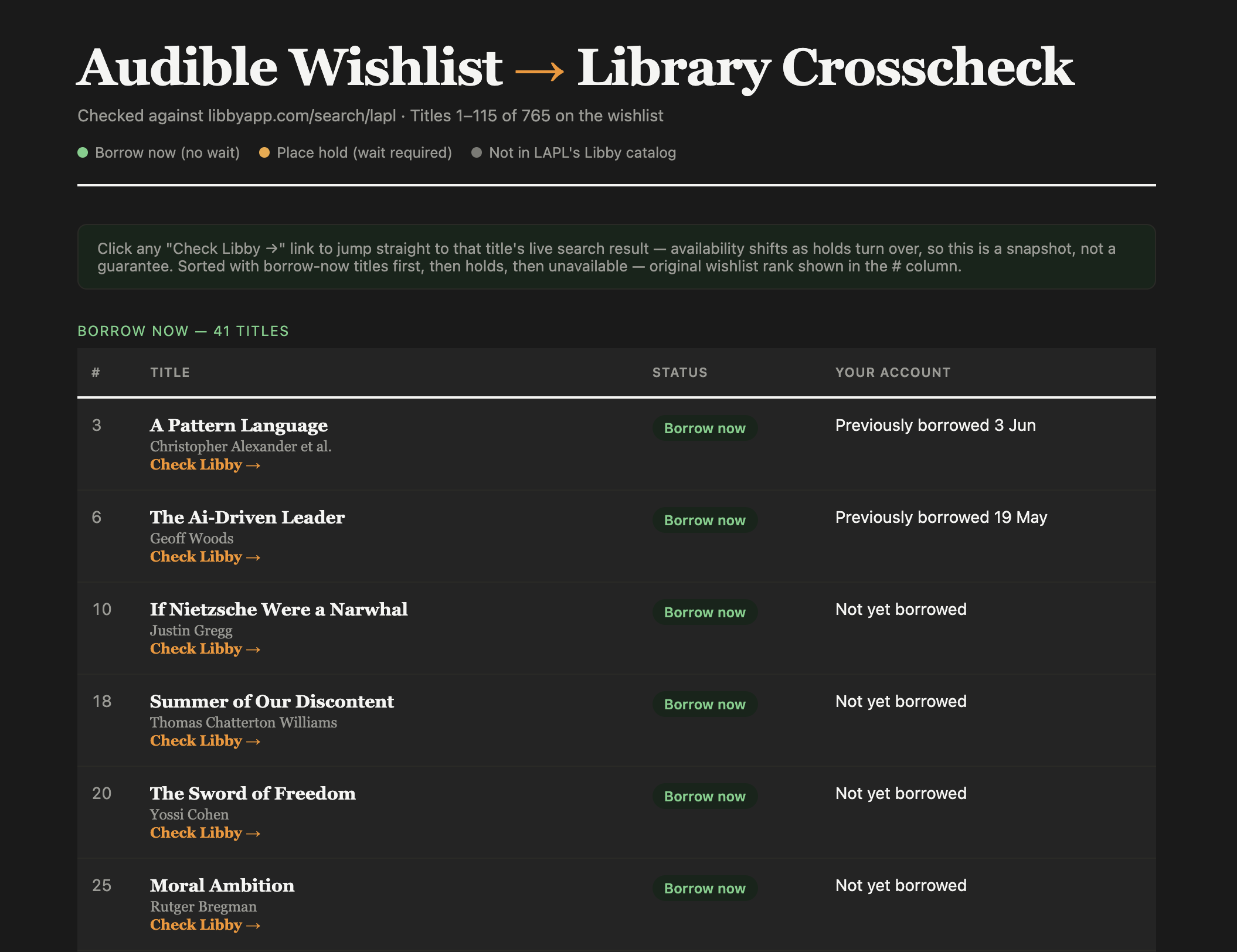
I keep a long wishlist on Audible. When I want a new audiobook, I face the same question: does the library’s Libby app have it for free? Checking hundreds of titles manually is too much work. So I built a workflow that checks for me. It reads my Audible wishlist and cross-references titles against my library's Libby catalog, sorting each one into three categories: borrow now, join the waitlist, or not available.
Workflow:
→ Gave Claude a workflow to read my Audible wishlist → Cross-reference every title against my library's Libby catalog → Sort each title into "borrow now," "join the waitlist," or "not available" → Configured the workflow to interpret availability using the exact button text rather than relying on badges or time estimates → Before spending an Audible credit, I check whether Libby already has the audiobook ready.
Model Bouncer
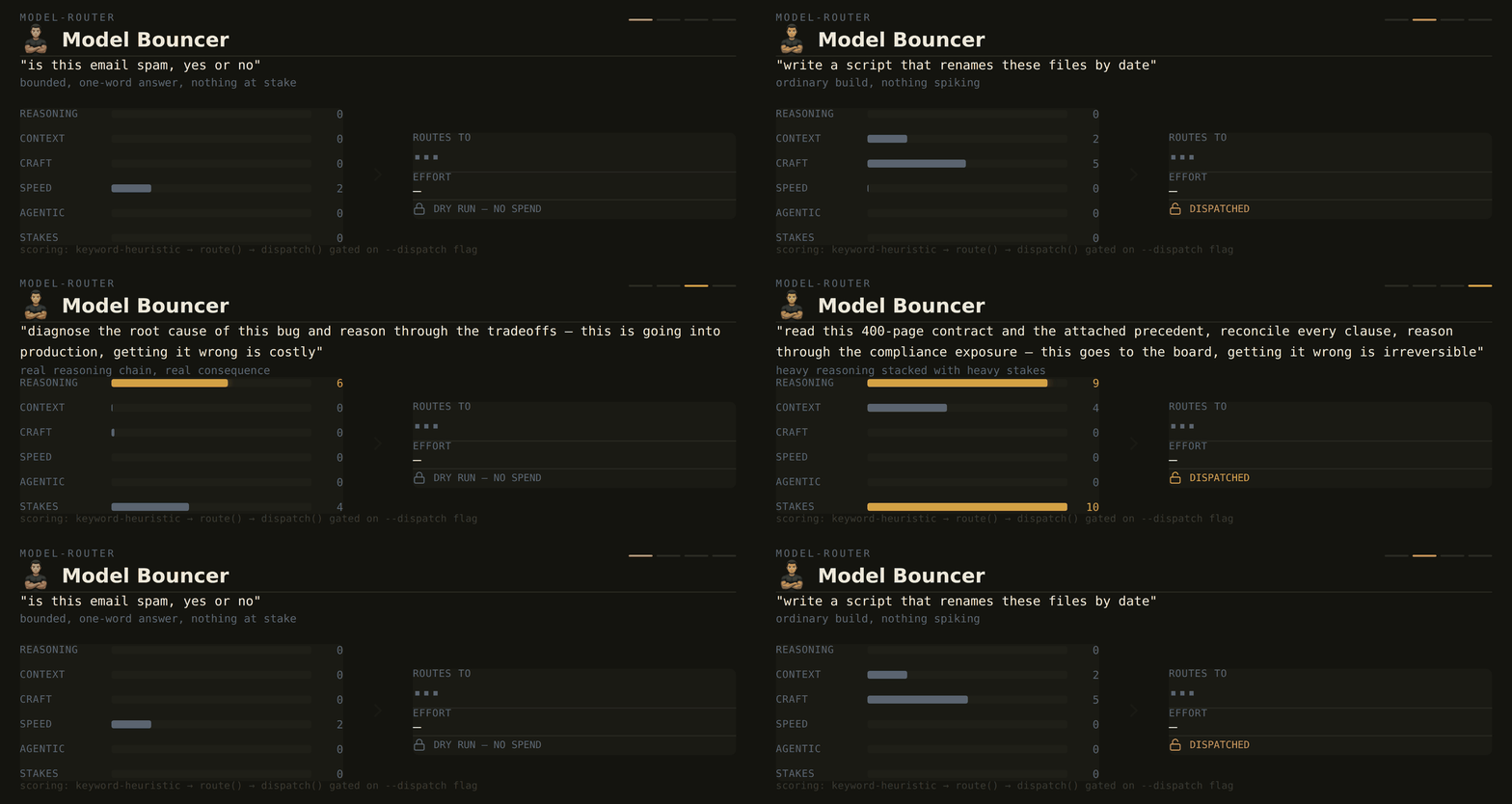
Every task in a Claude session runs on whatever model that session is using, so a two-line formatting fix can burn the same capacity as a hard strategic problem. I built a dispatcher to stop paying premium rates for simple work. It scores each task across six dimensions (reasoning required, context load, craft/nuance, speed priority, agentic complexity, and consequence of failure), then recommends a model and effort level, from a light fast option for rote work up to full capability for the hard stuff.
Workflow:
→ Had Claude build a scoring system across six dimensions: reasoning, context, craft, speed, agentic complexity, and failure risk → Used the score to recommend a model, from lightest to heaviest → Added a recommendation for how much effort that model should apply → Kept scoring free and separate from dispatching, since dispatching costs real money → Required an explicit confirmation flag before anything runs.